

Are you tired of the uncertainty that comes with trying to time the market as it goes up and down like a ship on the Sunshine Skyway Bridge? The purchase of a new home is a significant milestone. Yet the process of financing this purchase can be unclear and even stressful. When it comes to funding your future, in our opinion, nothing is more important than providing you with the clarity you need.
If you want predictable, steady payments every month, then you will most likely go with a fixed-rate loan. However, there are several factors that determine if you are eligible for a loan. Here you will find the latest requirements for a fixed rate mortgage. You should be able to find everything you need to get approved for a mortgage loan. You will find the credit score range, down payment, and debt to income ratio that you will need to qualify for a mortgage loan.
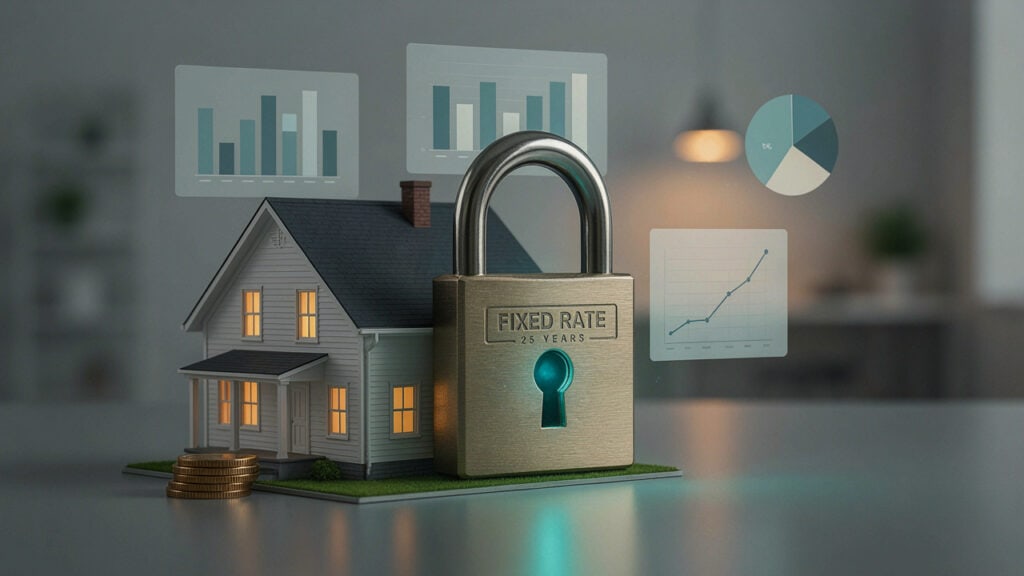
How Your Rate Is Locked for the Life of the Loan
Before jumping into the calculations, let us take a brief look at the concept behind this particular type of a mortgage. As mentioned on Wikipedia, a fixed-rate mortgage is a type of a loan where the interest rate is fixed during the whole period of payment, regardless of the term. In other words, there will be no additional charges and fees, so the rate, which can be 15% for instance, will stay at 15%.
This offers complete peace of mind, because your monthly payments of principal and interest are fixed from your first payment to your last payment. You will never again have to worry about housing price inflation making your monthly payments impossible to afford.
The mortgage interest rates in the market tend to experience severe volatility over time. In the past 5-6 years, a significant peak was observed, which was followed by a period of stabilization. Having an opportunity to choose a consistent mortgage rate option offers a reliable solution for ensuring the stability of your payments.
15-Year vs. 30-Year Requirements Compared
When determining fixed rate mortgage requirements, you will normally have to opt for either 15 year or 30 year mortgages. Both the options provide an edge of having a fixed interest rate, yet the requirements are slightly different as far as the lender is concerned.
Below is a shortlist comprising of the 15 year vs 30 year requirements
- Monthly Income Needs:A fifteen-year loan means paying back the house in half the time. This will require higher monthly payments. You also need to prove that you have more income coming in to the lender.
- Debt-to-Income (DTI) Limits: Because the monthly payment is higher for a 15 year loan your DTI ratio will increase. You will have less existing debt to qualify for a 15 year loan than you would for a 30 year loan.
- Credit Score Minimums: The base credit score requirements should be about the same for both. However, lenders may look at your credit history more carefully for a 15 year loan, because payments would be larger.
- Down Payment Rules: These remain largely the same for both terms. The loan program (FHA or Conventional) dictates the down payment, not the length of the loan itself.
Most buyers go for the 30 year option, as it keeps their payments low. The 15 year option allows you to make a much larger down payment and save tens of thousands of dollars in interest over the life of the loan.
Are you considering an adjustable rate mortgage and think it may be right for you? Well, we can help!
Check out our detailed guide here: https://future.loans/fixed-vs-variable-mortgages-how-to-choose-the-right-loan-for-your-future/.
Credit Score & Down Payment Ranges
Let’s talk about the numbers. Your credit score, and your down payment are directly related. The lower your credit score the higher the down payment is in most cases. The better your credit score is, the less you need to put down as a down payment.
If you are looking to get a fixed rate mortgage in Florida here are some general percentages that you will want to be close to depending on the type of loan you go with.
| Loan Program | Minimum Credit Score | Minimum Down Payment | Best For |
| Conventional | 620 | 3% (for first-time buyers) | Buyers with good credit and moderate savings. |
| FHA Loan | 580 (or 500 with 10% down) | 3.5% | Buyers with lower credit scores or smaller down payments. |
| VA Loan | 580 – 620 (lender dependent) | 0% | Eligible military veterans and active duty service members. |
| USDA Loan | 640 | 0% | Buyers purchasing in designated rural or suburban areas. |
Credit Score Tiers
Your credit score doesn’t just determine if you are approved for a loan. It also determines what interest rate you get.
- Excellent Credit (740+): You will get the best interest rates that allow you to save the most money over the life of your loan.
- Good Credit (670-739): You will have no problem qualifying for most conventional loans with very good interest rates.
- Fair Credit (580-669): You may have a slightly higher interest rate on conventional loans. FHA loans can be an excellent option if you fall into this category.
- Poor Credit (Below 580): You may have difficulty qualifying for conventional loans. An FHA loan would allow for a 10% down payment but it may take some time to fix your credit so you can get approved.
Aim for a credit score of at least 620 to give yourself the widest variety of loan options and the best possible terms.
Understanding Your Debt-to-Income (DTI) Ratio
Your Debt-to-Income (DTI) ratio is one of those factors that are as important as your credit score. This ratio shows lenders how much of your income is used to pay off debts each month.
To calculate it, you need to divide your monthly debt payments by your gross income (the amount you make before taxes). For example, say you make $6,000 per month.
- Car payment: $400
- Student loans: $300
- Credit card minimums: $100
- Expected new mortgage payment: $1,600
- Total monthly debt: $2,400
If you take $2,400 by $6,000 and divide it by 6,000, you will get 0.40, and that is equal to 40% DTI.
Most lenders are looking for 43% or lower for conventional, so if it’s 43% and over you can try applying for an FHA loan, since as per FHA guidelines you can get away with 50% DTI.
If your debt-to-income ratio is high, pay off your debts such as credit card balances or car loans before applying for a mortgage. Doing so will make it much easier and quicker to get approved for a loan.
You don’t want your DTI to be higher than 43%, although some lenders may allow it to go up to 50% in certain circumstances.
The Benefits of Meeting These Requirements Early
Getting your finances in order before you start shopping for a mortgage can give you a leg up. Lenders like to see buyers who are prepared. By knowing and meeting the fixed rate mortgage requirements well ahead of time you can get pre-approved much quicker.
A fast pre-approval significantly increases your appeal as a buyer. In a competitive market such as Florida, it is crucial to ensure that your offer will be accepted by the seller. Having a clean credit score, a low debt-to-income ratio, and enough money for a down payment will make your offer more desirable.
We always advise our clients to start analyzing their financial status at least three to six months before planning to start looking for a place. It allows you to fix errors in your credit report or pay off a loan that you forgot to discharge.
Why Choosing the Right Partner Matters
At Future Home Loans, we are a veteran owned brokerage, which means we know the Florida market backwards and forwards. From the condos in South Beach, to families buying their first home near the Kennedy Space Center to the Everglades, we can get you the financing you need.
We work with dozens of different lenders to shop around for the best possible deals on your behalf, so you’re not limited to what a national bank or two might offer. We do the hard work for you, so you get exactly what you need.
Are you unsure whether you should shop at the bank or get help from a mortgage broker? Then, please, take a closer look at Mortgage Broker vs. Bank: Which Gets You a Better Rate in Florida? article. It will tell you how we can help you save your time and money.
Let’s Secure Your Future Today
Being aware of the prerequisites related to fixed rate mortgages is essential in order to avoid possible complications. In this regard, it is vitally important to analyze one’s credit score, calculate one’s debt-to-income ratio, and save up for a decent down payment.
When you are ready to make the move, we are here for you. We cut through the bureaucracy of the big banks to get you the best options available.
Are you ready to see your options? Contact us and allow us to run the numbers, look at your options, and get you into the home of your dreams in Florida. Let us help you get a fast, easy pre approval by contacting us through our website today.
Frequently Asked Questions (FAQs)
What credit score do I need to buy a house in Florida?
For a conventional loan in Florida, the minimum score is 620. An FHA loan is available for a down payment of 3.5%, with a minimum score of 580.
Are fixed mortgage rates higher in Florida than other states?
No, rates are determined by bonds, not states. Your own credit score, DTI, and down payment affect your rate much more than your Florida ZIP code.
Can I get a Florida mortgage with only a 10% down payment?
Absolutely. Standard practice allows 3% down on conventional first homes and 3.5% down on an FHA. That’s why our recommendations of putting 10% down are such great options.
How do property taxes in Florida affect my DTI?
Your lender will be factoring in future property taxes and insurance payments. Since Florida’s tax laws vary so much from county to county, this figure will play a role in determining your final DTI.
Does Future Home Loans work with veterans in Florida?
We are a veteran owned company, and we love working with military members around the Jacksonville, Pensacola area, and throughout the state. We can help you access your VA loan benefits to purchase a home with 0% down.